Nirguna Yoga School
Featured Training Module
Featured Training Module
The Art of Yin Yoga
With Crista Chavez | July 10–12th
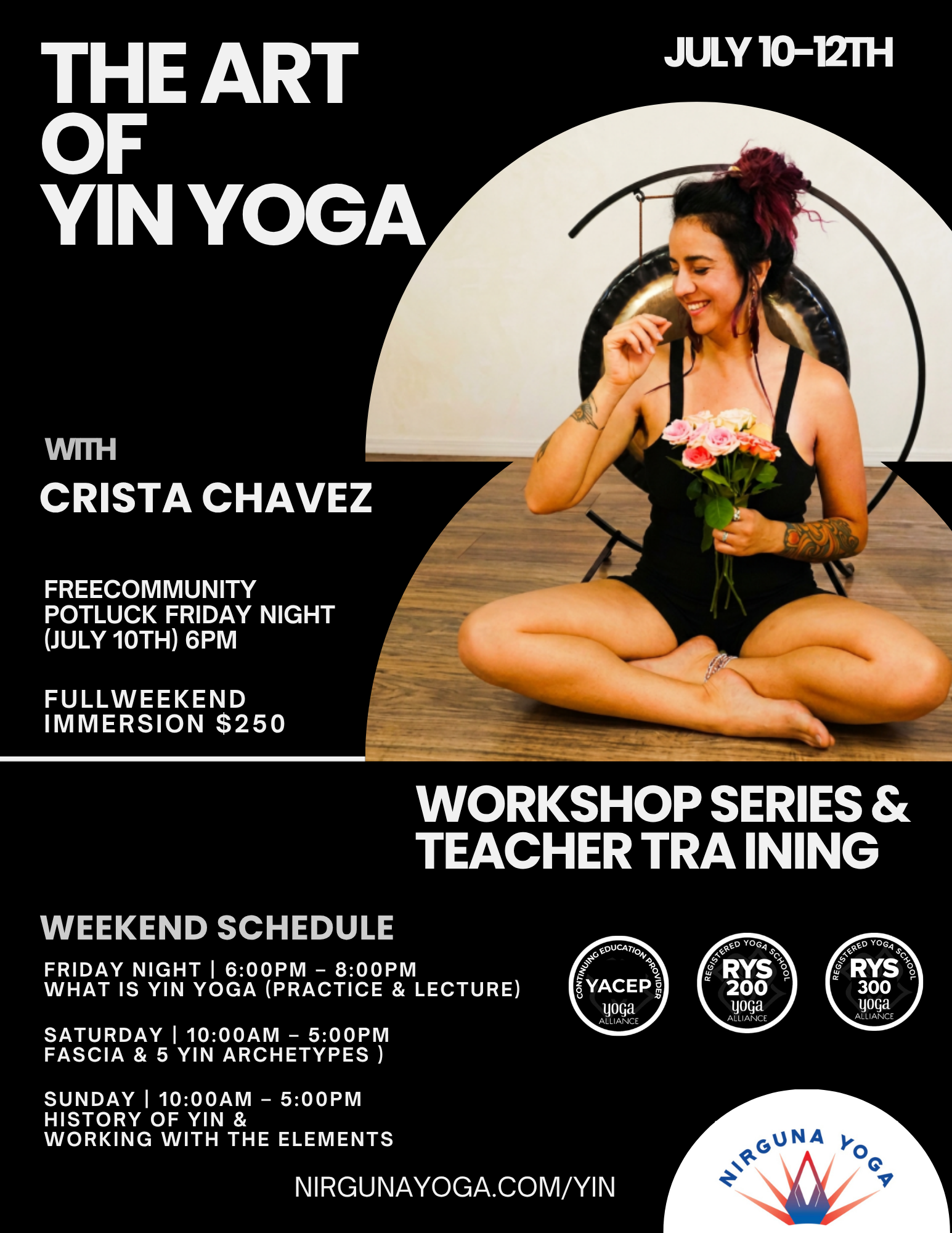
Deepen your understanding of the quieter side of yoga.
Together we’ll explore the philosophy behind Yin Yoga, functional anatomy, fascia, joint health, meridian pathways, and the energetic effects of long-held postures.
Through practice, posture analysis, sequencing, and teaching methodology, trainees will develop the skills necessary to confidently teach Yin Yoga while deepening their own understanding of stillness and embodied practice.
Module Intention
“To introduce students to the philosophy, physiology, and practice of Yin Yoga as a method for cultivating stillness, resilience, and deep tissue transformation—rooted in both Daoist and anatomical wisdom.”
- Certification Pathway: Counts as one complete module toward your RYT 200, 300, or 500 qualification, or Continuing Education (YACEP) credits.
- Studio Benefit: Includes a one-month unlimited membership at Nirguna Yoga to help integrate your training.
Curriculum & Study Elements
1. What Is Yin Yoga?
- Passive, long-held practices targeting fascia, bones, and the nervous system.
- Key principles: arriving, stillness, time, and regulation over intensity.
- Contrasting yin elements with dynamic yang traditions.
2. Fascia & Connective Tissue
- The physical roles of tensegrity, hydration, and memory in structural tissues.
- Cellular communication via mechanotransduction and fibroblasts.
- Navigating emotional release: resolving “issues in the tissues.”
3. The 5 Yin Archetypes
- Shoelace: Outer hips (Gallbladder & Liver)
- Saddle: Quads/Knees (Stomach & Spleen)
- Caterpillar: Spine/Hamstrings (Bladder)
- Dragonfly: Groin/Inner legs (Liver & Kidney)
- Twist: Spine & Organs (Liver & Spleen)
4. Daoist Meridian Theory
- Mapping the physical paths of primary organ pathways.
- Five-element energetic frameworks and seasonal adaptations.
- Utilizing the “Rebound” phase to safely redistribute vital Qi.
5. History & Lineage
- Daoist martial roots with Paulie Zink.
- Anatomical systems and Chinese medicine integration via Paul Grilley.
- Mindfulness and meditation bridges from Sarah Powers.
6. The Art of Teaching Yin
- Holding trauma-informed space without attempting to “fix.”
- Invitational language, props artistry, and energetic temperature reading.
- Practical labs: small group practice teaching with constructive feedback.
Weekend Syllabus Schedule
Friday, July 10
Free Public Talk Night
Free Public Talk Night
6:00pm – 7:00pm
Yin Yoga Master Class – Feel the principles in your body.
7:00pm onwards
Community Potluck – Shared nourishment and connection. Open to all!
7:30pm – 8:30pm
What is Yin Yoga? Lecture – Group introductions, centering breath, and setting our container.
Saturday, July 11
10:00am – 11:00am
Opening Circle, Introductions, Centering Breath & Intention Setting
11:00am – 12:30pm
Group Āsana Practice & Shape Exploration
12:30pm – 1:30pm
Lunch Break
1:30pm – 2:30pm
Anatomy Intensive: Fascia Lecture (Interstitium, Fibroblasts, Creep & Rebound)
2:30pm – 4:00pm
The 5 Yin Archetypes – Experiential shape mapping lab
4:00pm – 4:30pm
Integration & Tea Reflection
4:30pm – 6:00pm
Seasonal Practice using Props & Variations
Sunday, July 12
10:00am – 11:00am
Yoga on the Ropes: Yin Edition
11:30am – 12:30pm
Opening Circle & Lecture: The Historical Roots of Modern Yin
12:30pm – 1:30pm
Methodology Lab: Opening a Yin Class & Holding Safe Space
1:30pm – 2:30pm
Lunch Break
2:30pm – 4:00pm
Seasonal Practices: Working with the Elements and Meridians
4:00pm – 6:00pm
Creative Integration Practice & Peer Teaching Lab
6:00pm – 6:30pm
Closing Circle & Shared Merits